

After Hurricane Isaias: Is Your Business Ready to Reopen?
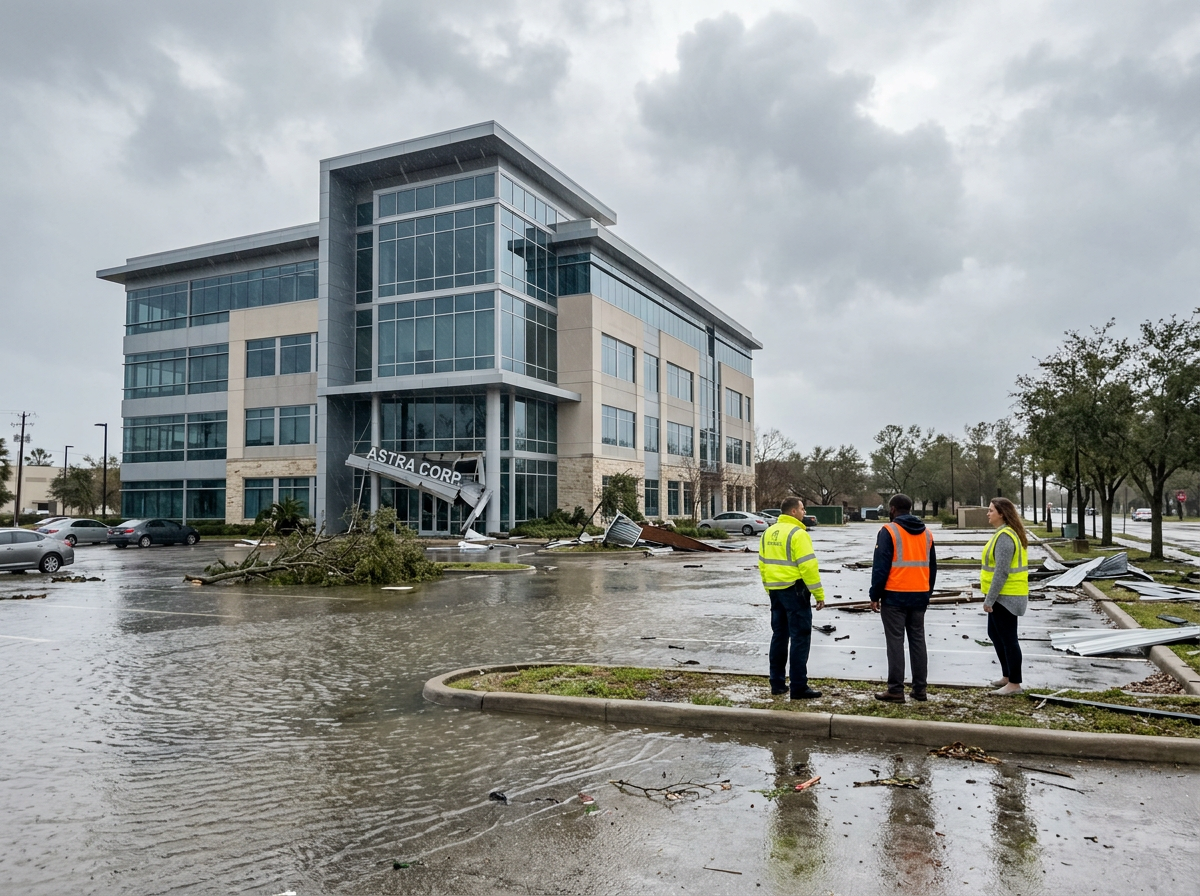
Hurricane Isaias has moved on, but for businesses across Northwest Florida, recovery is just beginning. Here's what business owners should expect, what to check before reopening, and how to avoid costly technology problems after the power comes back.
Hurricane Isaias made landfall near Destin, Florida, on October 9, 2026, as a Category 2 hurricane, leaving widespread power outages, damaged infrastructure, and disrupted operations throughout the Florida Panhandle.
For businesses in Pensacola, Fort Walton Beach, Destin, Santa Rosa Beach, Panama City, DeFuniak Springs, and surrounding communities, the next challenge isn't simply cleaning up. It's getting operations back to normal safely.
And there's one important distinction business owners should understand: Just because your building has power doesn't mean your business is ready to operate.
From internet connectivity and payment processing to servers, security systems, and cloud applications, a hurricane can affect technology in ways that aren't immediately obvious.
Here's what Florida Panhandle business owners should know about the days and weeks following Hurricane Isaias.
Power Is Back. Why Isn't Everything Working?
One of the most common frustrations after a hurricane is discovering that technology doesn't automatically return to normal when electricity is restored.
During an extended outage, servers, network switches, firewalls, wireless access points, and other equipment may shut down unexpectedly. When power returns, these devices don't always restart correctly.
You might encounter:
Internet outages: Your building has electricity, but your internet provider's local infrastructure may still be damaged.
Network connectivity issues: Firewalls, switches, and wireless access points may need troubleshooting or controlled restarts.
Servers that won't start: Unexpected shutdowns, depleted UPS batteries, or hardware damage can prevent systems from restarting.
Payment processing failures: Credit card terminals and point-of-sale systems may lose connectivity even when computers appear to work.
Phone system outages: Cloud-based and VoIP phone systems depend on reliable network connectivity.
Security system problems: Cameras, access controls, and alarms may not reconnect properly.
For a retail business, this might mean accepting cash but not credit cards. For a medical practice, it might mean accessing cloud records while local printers and network equipment remain unavailable. For a manufacturer, it could mean a production floor that's ready to operate but can't communicate with essential systems.
What to do: Before employees resume normal operations, have your IT provider verify that critical systems are communicating correctly. Don't repeatedly power-cycle equipment or start servers in an arbitrary order. Some environments require a specific startup sequence to avoid additional problems.
2. Assess Your Building Before Restarting Technology
Even if the damage appears minor, electrical and environmental conditions can affect equipment.
Before powering on computers, servers, and networking equipment:
Confirm the building and electrical systems are safe with qualified personnel.
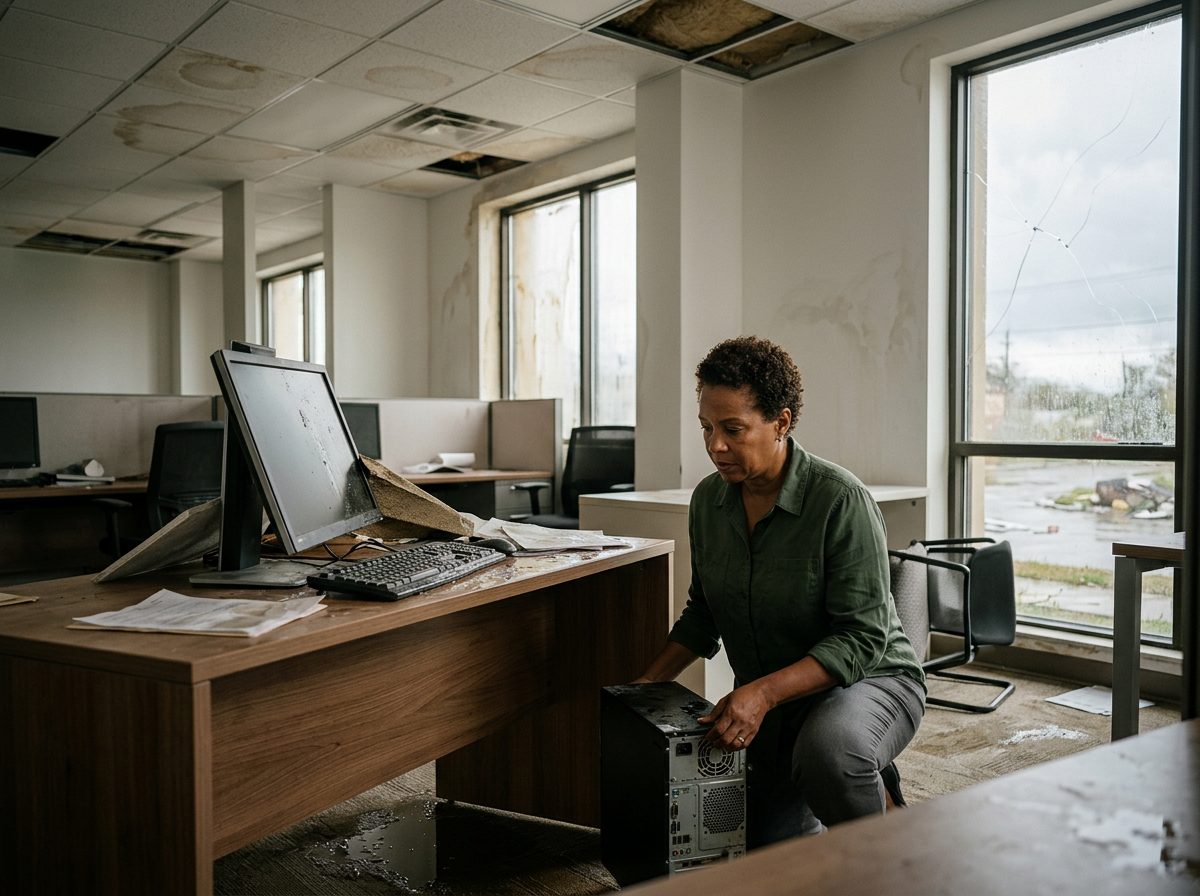
Check server rooms, network closets, and offices for water intrusion or excessive moisture.
Look for signs of electrical damage, including unusual odors or visibly damaged equipment.
Inspect UPS systems and surge protection devices.
Document damaged equipment with photographs before repairs or replacement.
Never turn on equipment that may have been exposed to water. Have qualified professionals inspect affected electrical systems.
Florida's Division of Emergency Management recommends documenting damage, contacting insurance providers promptly, and following local safety guidance before returning to affected facilities.
3. Don't Assume Your Backups Are Fine
A hurricane is a good reminder that having a backup and having a recoverable backup are not necessarily the same thing.
Extended power outages and unexpected shutdowns can interrupt backup jobs, damage local storage devices, or leave important data unprotected.
After Hurricane Isaias, business owners should ask their IT provider three questions:
When was our last successful backup?
Has the integrity of our backup data been verified?
If our primary systems failed today, how quickly could we restore operations?
For businesses using Microsoft 365, OneDrive, and SharePoint, this conversation should also include cloud data protection.
Microsoft 365 provides valuable availability and retention capabilities, but organizations still need to understand their recovery options for accidental deletions, ransomware, retention gaps, and extended disruptions.
What to do: Verify backup completion, investigate failed jobs, and test recovery of representative files or systems. For critical businesses, review whether the recovery time actually meets operational requirements.
4. Expect Internet and Communication Disruptions to Outlast Power Outages
A business may have electricity while its internet service provider, nearby communications infrastructure, or cellular network remains affected.
This can disrupt more than email.
Consider how many everyday business functions depend on connectivity:
Credit card processing and cloud-based POS systems
VoIP telephones and customer service lines
Cloud accounting and business applications
Microsoft 365, Teams, and SharePoint
Remote employee access
Security monitoring and connected cameras
Vendor ordering and inventory management
Businesses should identify which operations can continue offline, which require internet connectivity, and which may need temporary alternatives.
For example, a secondary internet connection from a different provider, cellular failover, Starlink satellite, or a properly configured backup connection can reduce downtime. However, these solutions should be tested in advance, not assumed to work during an emergency.
5. Cybercriminals Don't Take Time Off After Hurricanes
Natural disasters create opportunities for scams and cyberattacks.
Employees may be dealing with disrupted schedules, unreliable communications, urgent vendor requests, and unexpected changes to normal business processes.
That makes post-hurricane recovery an especially important time to remain vigilant.
Watch for fraudulent messages involving:
Emergency invoices for repairs or restoration.
Fake utility restoration notices.
Requests to change vendor banking information.
Fraudulent disaster-relief applications.
Emails impersonating insurers, contractors, or government agencies.
Unexpected requests for Microsoft 365 credentials or multifactor authentication approvals.
Businesses should independently verify payment changes and sensitive requests using previously established contact information.
The rule is simple: Urgency is not a reason to bypass your normal security procedures.
6. Plan for Employees, Not Just Equipment
A business continuity plan is only effective if the people responsible for operating the business are available.
Following Hurricane Isaias, some Florida Panhandle employees may still be dealing with power outages, damaged homes, childcare disruptions, limited cellular service, or transportation difficulties.
Business owners should establish realistic expectations about reopening and recovery.
Consider these questions:
Which employees are available, and who is still addressing personal recovery needs?
Which business functions must resume immediately?
Can some employees work remotely while facilities recover?
Who is authorized to declare systems ready for operation?
What is the backup communication method if cellular networks or internet services fail?
Communicate your reopening plan to employees, customers, vendors, and service providers. Prioritizing operations doesn't have to mean restoring every system at once.
7. Know What Disaster Recovery Assistance Is Available in Florida
Businesses recovering from Hurricane Isaias may qualify for financial assistance.
On October 11, FloridaCommerce announced the activation of the Florida Small Business Emergency Bridge Loan Program, providing $10 million in available short-term, zero-interest loans for affected businesses.
Eligible counties include Bay, Escambia, Okaloosa, Santa Rosa, Walton, Washington, Gulf, Holmes, and numerous others.
Qualified businesses can apply for loans up to $100,000, with higher limits for certain agricultural and aquaculture operations. These are repayable loans, not grants.
Application deadline: November 25, 2026, or until funding is exhausted.
Business owners can access the following resources:
Florida Business Damage Assessment Survey — Select Hurricane Isaias to report economic or physical damage.
Florida Division of Emergency Management — Business Resources
FEMA Ready Business — Recovery and continuity planning resources
8. Use Hurricane Isaias to Identify Gaps in Your Business Continuity Plan
Once immediate operations are stable, it's worth reviewing what worked and what didn't.
Did your backups perform as expected? Could employees communicate? Did your internet failover activate? Were critical business systems accessible? Did everyone know whom to contact?
These aren't just technology questions. They're business continuity questions.
The Federal Emergency Management Agency recommends coordinating IT disaster recovery with an organization's overall business continuity plan.
For Florida Panhandle businesses, that means planning for more than hurricanes. Power disruptions, hardware failures, cyberattacks, and internet outages can all create similar operational challenges.
A practical post-storm technology review should include:
Backup verification and recovery testing
Battery backup and power protection assessment
Internet redundancy and automatic failover testing
Server and network recovery procedures
Remote access and communication contingencies
Cybersecurity protections and incident response
Documented recovery responsibilities and priorities
The goal isn't to eliminate every possible disruption. It's to reduce the time and uncertainty involved in getting your business operational again.
Getting Back to Business in Northwest Florida
Hurricane Isaias is another reminder that business recovery doesn't happen at the same pace for everyone.
Some businesses reopen as soon as electricity returns. Others face days of connectivity issues, damaged equipment, or disrupted operations.
For business owners, the priority should be restoring essential services safely, understanding the dependencies between systems, and addressing vulnerabilities revealed by the storm.
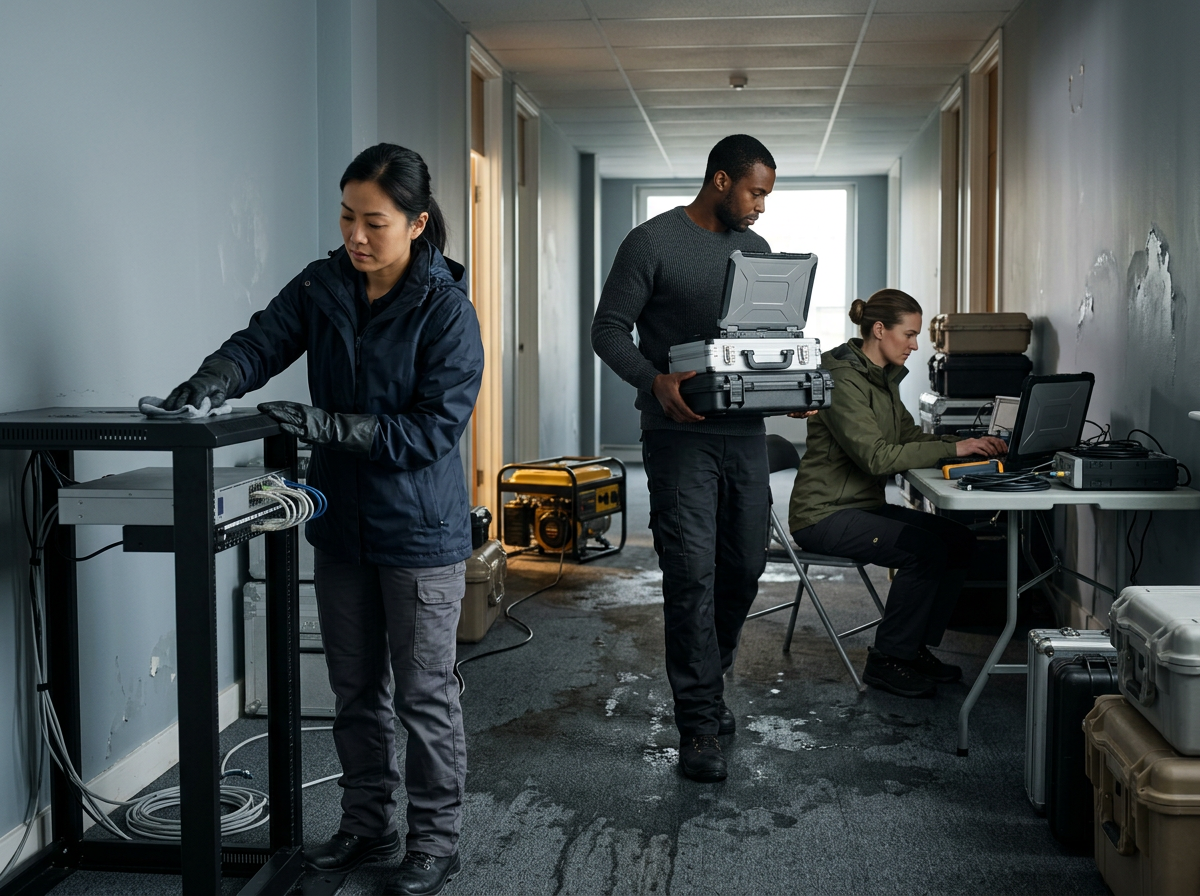
At SNH TECHNOLOGIES, we're based in Santa Rosa Beach and support organizations throughout the Florida Panhandle with managed IT services, cybersecurity, backup and disaster recovery, and business continuity planning.
We understand the challenges Northwest Florida businesses face because we're part of the same community.
Whether you're dealing with post-hurricane technology issues or want to improve your readiness for the next disruption, our team can help you evaluate your environment and develop a practical recovery strategy.